



12v air conditioners - why so expensive?!?!
12V air conditioners are pricey because they’re engineered for off-grid use with limited power sources, like van batteries. Unlike standard home units, they use advanced components such as inverter compressors and brushless fans to maximize energy efficiency while minimizing power consumption. These features are crucial for mobile setups like campervans and RVs, but they significantly increase manufacturing costs.
Here’s a quick breakdown of five popular models available in Canada:
- Nomadic Cooling X2: High cooling capacity, durable, and quiet, but expensive and power-intensive.
- Mabru RV 12000: Reliable cooling and mid-range pricing, but requires fixed installation.
- Dometic RTX 2000: Strong performance and multiple modes, but heavy and costly.
- Fresair S6: Compact and energy-efficient, but limited cooling for smaller spaces.
- Zero Breeze Mark 2: Portable and battery-powered, but comes with a high price tag and short battery runtime.
These units are designed for specific needs, from large van setups to portable outdoor use. While the upfront costs are steep, their efficiency and durability make them valuable for off-grid living in Canada’s varied climates. Choose based on your van setup, cooling requirements, and budget.
OFF-GRID Air Conditioning (12/24v) For LESS Than $500! Cheap Junk or Hidden Gem? (NOT SPONSORED) #26
Why 12V Air Conditioners Cost So Much
The high price of 12V air conditioners stems from the cutting-edge technology required to deliver efficient, off-grid cooling while conserving energy.
Inverter Compressor Technology
At the heart of these systems is the inverter compressor, which adjusts its output dynamically to meet cooling needs. Using microprocessors, it fine-tunes the speed based on real-time conditions, minimizing energy consumption and extending battery life.
Efficiency-Boosting Components
Many units also feature brushless fans. These fans not only draw less power but also operate quietly, enhancing the overall efficiency and comfort of the system.
The inclusion of these advanced components significantly raises manufacturing costs, which is reflected in the price tag. Up next, we’ll look at some specific models that showcase these technologies.
1. Nomadic Cooling X2

The Nomadic Cooling X2 stands out as a top-tier option for van conversions and RVs, blending sleek design with practical functionality. This 12V air conditioner is designed specifically for off-grid living, making it a reliable choice for those embracing the van-life lifestyle. With its efficient engineering, it keeps power consumption low and operates quietly - two features that are especially important when dealing with limited space and battery resources. While specific details like cooling capacity, power requirements, weight, noise levels, and pricing haven't been independently confirmed, the X2 has earned a strong reputation for delivering reliable cooling in off-grid environments.
2. Mabru RV 12000
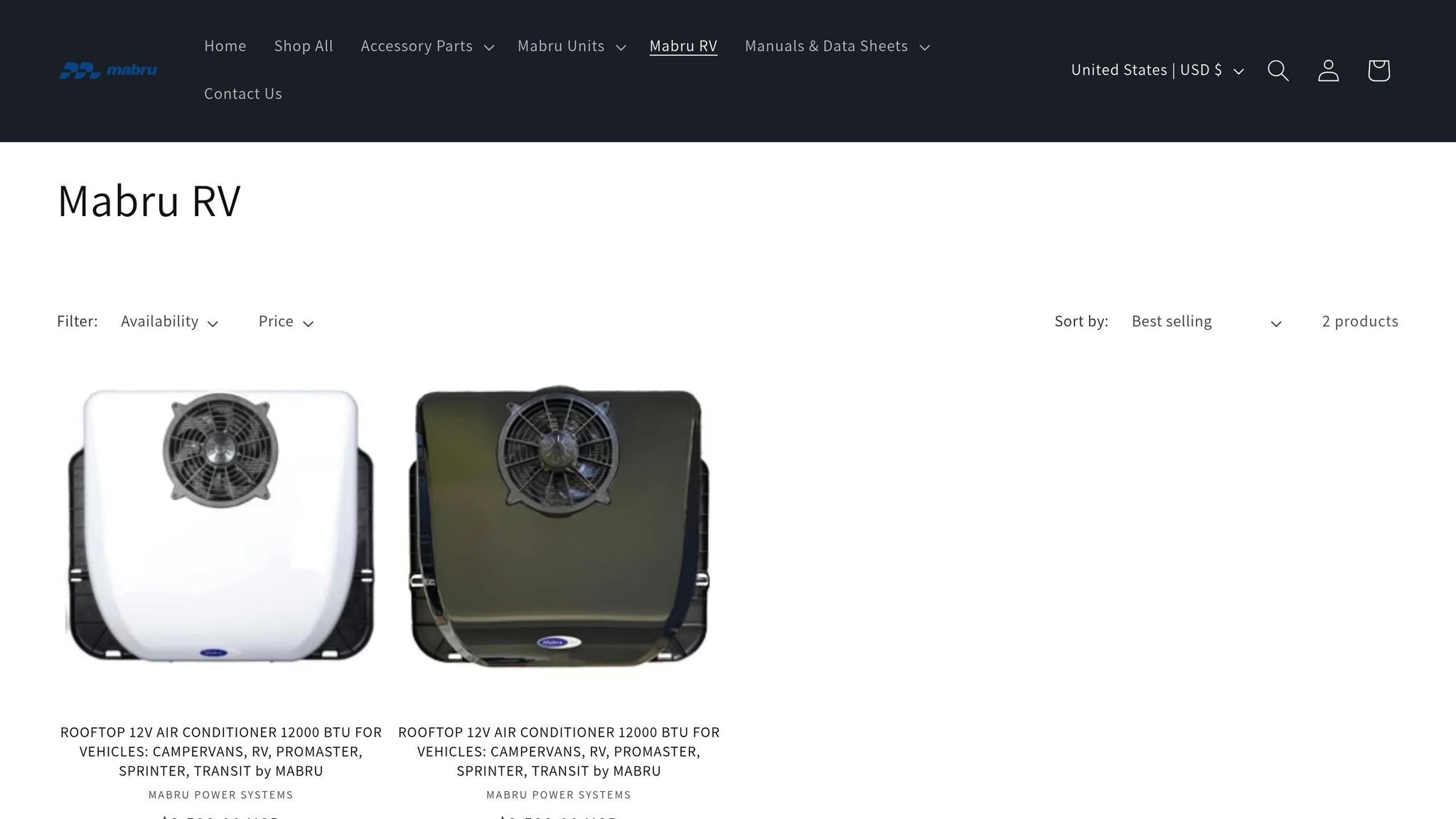
The Mabru RV 12000 is a solid mid-range option that combines reliable cooling performance with energy efficiency, making it a great fit for RVs and van conversions. It strikes a balance between effective cooling and thoughtful power usage, catering to those who need dependable air conditioning on the road.
Equipped with a variable-speed compressor, it adjusts output to prevent constant cycling, which not only extends the life of your battery system but also ensures smoother operation. Built with marine-grade, corrosion-resistant materials and housed in a weatherproof casing, it’s designed to endure tough road conditions and varying climates. Its specifications are tailored for mobile use, focusing on cooling efficiency, manageable power consumption, lightweight design, and reduced noise levels.
With its price sitting in the mid-tier range of 12V air conditioning units, it reflects the engineering and durability required for mobile cooling systems.
3. Dometic RTX 2000
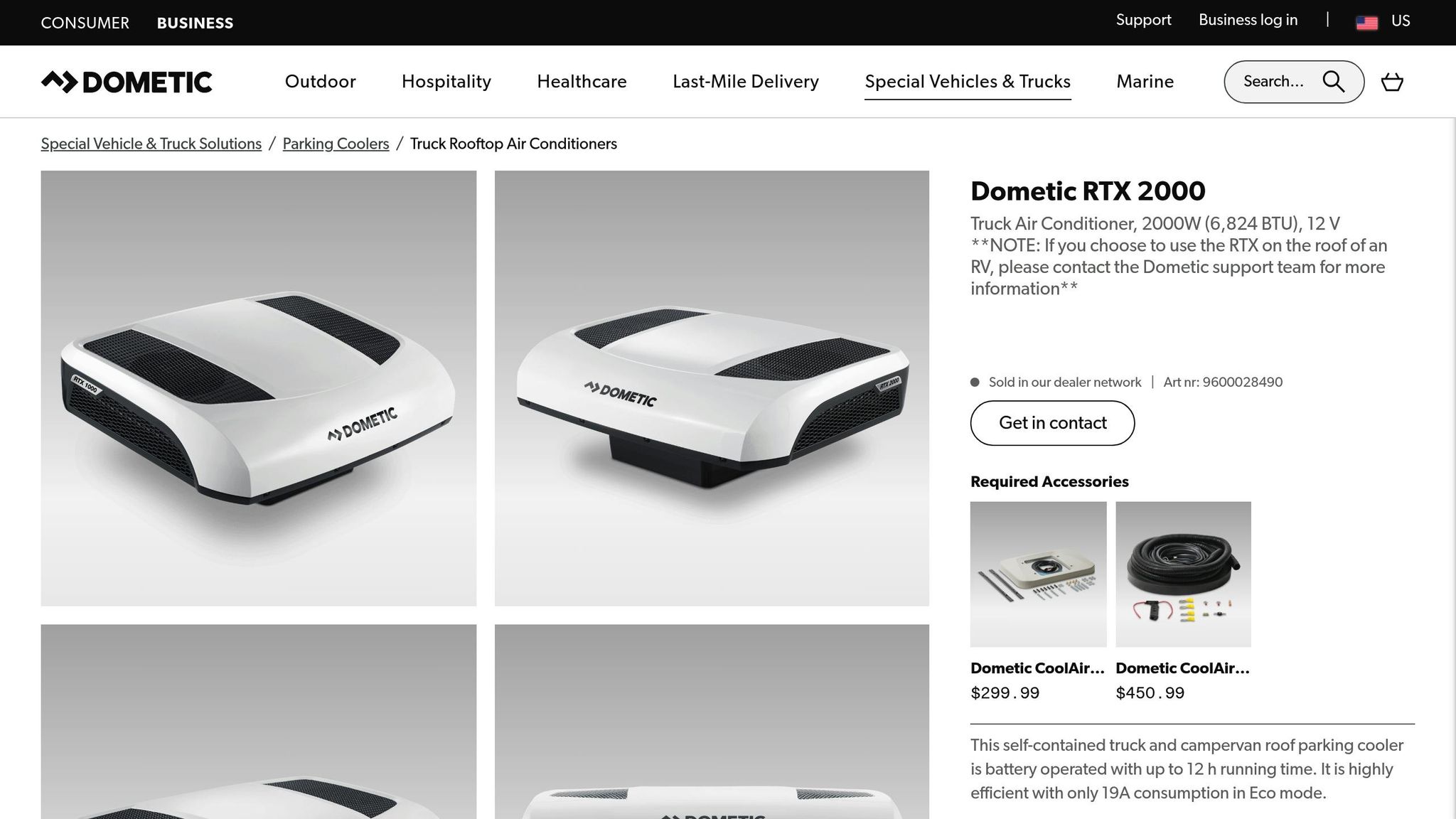
The Dometic RTX 2000 is a roof-mounted, self-contained air conditioning unit designed for campervans and trucks. With a cooling capacity of 2,000W (6,824 BTU), it uses a variable-speed inverter compressor and offers four operating modes: Auto, Eco, Boost, and Manual. Here's a closer look at its specifications:
Power Consumption (Amps)
In Eco mode, the unit operates at 19 amps, while its overall power consumption ranges from 10 to 58 amps, depending on cooling demand. This range ensures a balance between performance and battery efficiency [4–7].
Weight (kg/lbs)
Weighing in at 70 kg (154 lbs) [4–7], the RTX 2000 is built for durability. However, this weight requires a sturdy roof and mounting system to handle the load. Its rugged construction makes it a reliable, albeit premium, choice for off-grid setups.
sbb-itb-4b558ec
4. Fresair S6

The Fresair S6 is a compact 12V air conditioner designed specifically for smaller campervans and RVs. Unlike bulkier roof-mounted systems, this unit offers flexible installation options, whether inside the vehicle or mounted externally. This flexibility makes it easier to set up and adapt to different layouts. Using a dependable vapour compression cycle, it provides steady and efficient cooling while keeping energy consumption low. Lightweight and quiet, the Fresair S6 is a great fit for van conversions where saving space and minimizing noise are top priorities. Up next, we'll dive into the Zero Breeze Mark 2 to explore another portable cooling solution.
5. Zero Breeze Mark 2
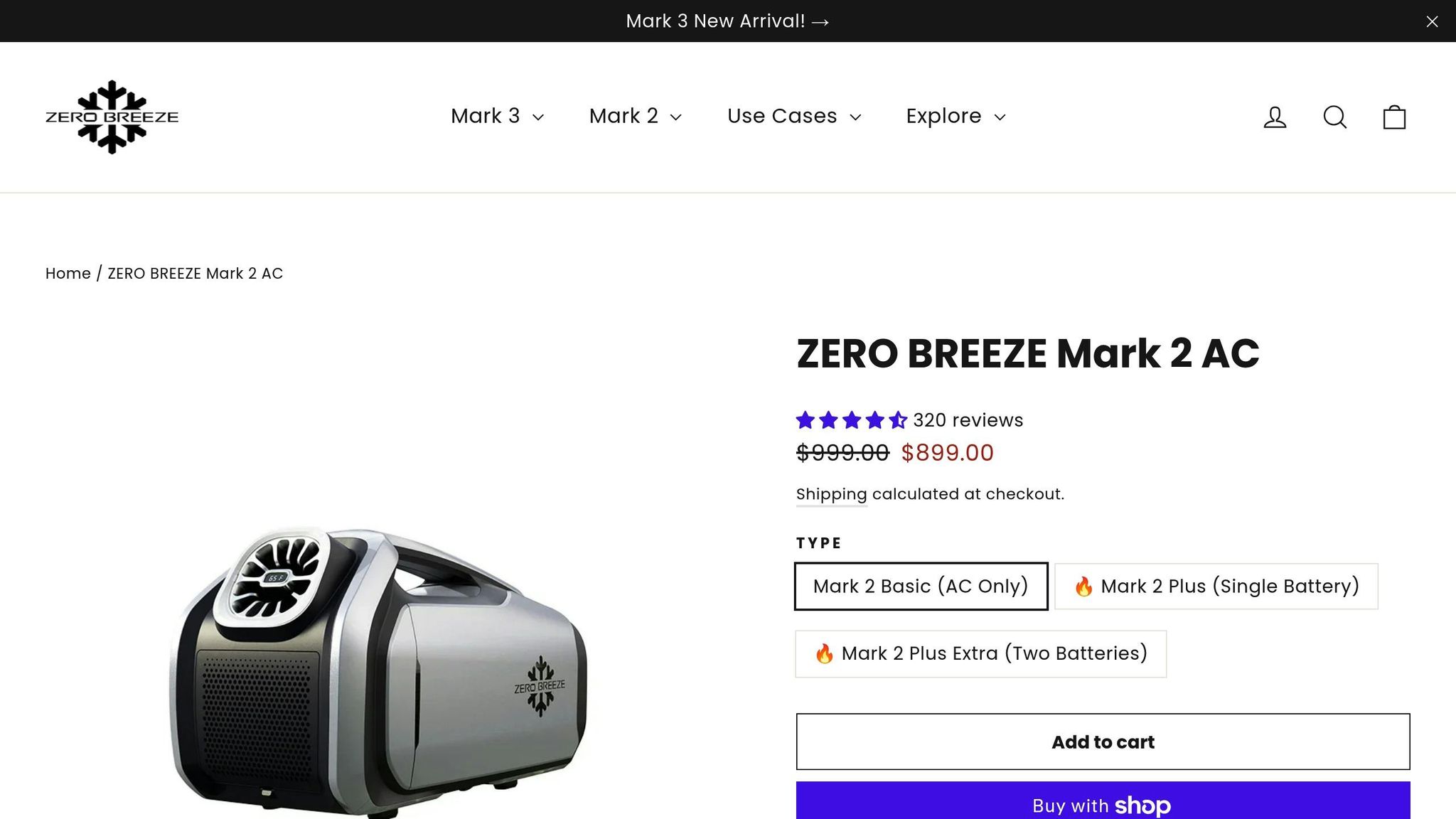
The Zero Breeze Mark 2 is a portable 12V air conditioner designed for mobile use. What makes it stand out is its battery-powered setup, which means it can run independently of your vehicle's electrical system. This makes it perfect for outdoor adventures or cooling spaces that aren't directly connected to your van. By combining advanced inverter technology with a dual-hose design, it aims to maximize efficiency.
For Canadian van lifers, this flexibility is a game-changer. Whether you're dealing with humid summers in Ontario or the dry heat of Alberta, the Zero Breeze Mark 2 is built to handle a variety of climates. Plus, its sleek, modern design fits right into van conversions without feeling out of place.
Performance Specifications
While its exact cooling performance depends on factors like installation and usage, the Mark 2 is tailored for small to medium van conversions. It strikes a balance between effective cooling and manageable power consumption, offering flexible power options for different setups. Its lightweight and compact build makes it easy to move between indoor and outdoor spaces, adding to its convenience. These thoughtful design elements contribute to its position as a premium 12V air conditioner.
Pricing and Value
The Zero Breeze Mark 2 comes with a premium price tag, reflecting its advanced features and portable design. Its built-in battery system allows for off-grid cooling, and you can even purchase additional batteries for extended use during longer trips. While the price may be on the higher side, it aligns with the convenience and performance it offers.
Next, we'll dive into the pros and cons of choosing these portable 12V cooling systems.
Pros and Cons
Choosing the right air conditioning unit for your van conversion involves weighing the strengths and challenges of each model. Here's a breakdown to help guide your decision:
| Model | Pros | Cons | Best For |
|---|---|---|---|
| Nomadic Cooling X2 | High cooling capacity, specifically designed for van life, durable build quality | Higher price tag, increased power consumption | Larger van conversions with advanced electrical setups |
| Mabru RV 12000 | Strong cooling performance, dependable operation, good value for money | Requires permanent installation, less portable | Full-time RV living with dedicated AC space |
| Dometic RTX 2000 | Well-known brand, reliable performance, extensive service network | Expensive upfront, more complex to install | Those seeking long-term dependability |
| Fresair S6 | Compact size, energy-efficient, easier to install | Limited cooling capacity, suited for smaller spaces | Weekend adventures and compact van builds |
| Zero Breeze Mark 2 | Lightweight, battery-powered, highly portable | High price, short battery runtime | Occasional use and outdoor versatility |
These comparisons highlight the performance, energy demands, and installation requirements for each model, helping you determine which fits your needs.
When selecting a unit, consider these key factors: cooling performance, energy efficiency, portability, price, and installation complexity.
Cooling Performance
The size of your van and its insulation will significantly impact cooling needs. Models like the Nomadic Cooling X2 and Mabru RV 12000 are excellent for larger spaces but require a robust electrical setup. On the other hand, the Fresair S6 offers moderate cooling with lower power consumption, making it better suited for smaller or less insulated spaces.
Energy Efficiency
Energy use is a critical factor, especially if you're relying on solar panels or battery power. While the Zero Breeze Mark 2's battery-powered design is convenient, you'll need to carefully manage charging cycles. The Dometic RTX 2000 strikes a balance, offering solid cooling performance without excessive energy demands.
Portability
If flexibility is a priority, the Zero Breeze Mark 2 is unmatched. You can easily move it between your van, a tent, or even outdoor gatherings. The other models are designed for permanent mounting, which integrates them seamlessly with your van but sacrifices portability.
Price
The Fresair S6 is a more budget-friendly option, while the Zero Breeze Mark 2 and Dometic RTX 2000 come with higher price tags due to their advanced features. Be sure to weigh what you're paying for against your specific needs.
Installation Complexity
For those seeking a quick and simple setup, the Zero Breeze Mark 2 is ideal, requiring minimal effort. However, models like the Mabru RV 12000 and Nomadic Cooling X2 involve more extensive installation, including mounting and electrical work, which might require professional assistance.
Ultimately, your decision will depend on how these factors align with your budget, van setup, and cooling needs. Each model caters to different lifestyles, so understanding these trade-offs will help you choose the best cooling solution for your journey.
Conclusion
The higher price tags of 12V air conditioners stem from the advanced inverter technology, compact refrigeration systems, and durable designs needed for off-grid cooling solutions.
But beyond the technical aspects, the real value of these units lies in their ability to cater to Canada's unique climate challenges. Whether you're braving the heat of an Okanagan summer or navigating the humidity of Ontario, a reliable 12V air conditioner can make van living far more comfortable. The freedom to maintain a pleasant temperature without depending on shore power or generators is a game-changer for extended off-grid trips.
There’s a range of models to suit different needs. For smaller spaces, the Fresair S6 provides a budget-friendly option. If you need greater cooling capacity and durability, the Nomadic Cooling X2 and Dometic RTX 2000 are excellent choices. For those prioritizing portability, the Zero Breeze Mark 2 stands out.
Investing in an efficient unit also means reducing generator dependency, preserving battery life, and staying comfortable during extreme weather conditions.
When planning your van conversion, consider a 12V air conditioner as a necessity rather than a luxury. While advanced technology and limited production may drive up costs, the reliability and efficiency these systems offer make them worth every dollar. Select a unit that fits your specific requirements, electrical setup, and budget. A well-chosen cooling system doesn’t just enhance comfort - it ensures safety and peace of mind during your Canadian adventures, no matter where the road takes you.
FAQs
Why are inverter compressors and brushless fans important in 12V air conditioners, and why do they make them so expensive?
Inverter compressors and brushless fans play a crucial role in the performance of 12V air conditioners, offering precise cooling, energy efficiency, and quieter operation. Unlike traditional compressors, inverter compressors adjust their speed to match cooling demands, which helps avoid sudden energy spikes. Meanwhile, brushless fans minimize friction and wear, resulting in longer lifespans and reduced noise levels.
That said, these advanced components come with a higher price tag. Their design demands specialized engineering and premium materials, which naturally increases production costs. On top of that, the niche market for 12V air conditioners - compared to standard household units - limits production volume, making it harder to benefit from economies of scale. While the initial investment is steeper, these features deliver energy savings and enhanced performance, making them ideal for off-grid or mobile setups like van conversions.
Why are 12V air conditioners so expensive, and how do I choose the best one for my van conversion?
12V air conditioners often come with a hefty price tag, mainly because of their specialized design, energy-saving features, and the specific market they serve. These systems are built to deliver effective cooling while operating on minimal power, making them a perfect fit for off-grid setups like van conversions.
When choosing a 12V air conditioner, it’s important to evaluate the cooling capacity (measured in BTUs) to ensure it suits your van’s size and insulation quality. Units with high energy efficiency ratings are a smart choice, especially if you’re running them on batteries or solar panels, as they help conserve power. Also, keep an eye on noise levels - you’ll want something that won’t disrupt your peace. Make sure the unit is the right size for your space to avoid problems like over-cooling or under-cooling. Don’t forget to account for installation and maintenance expenses to stick to your budget.
If you’re trying to cut costs, there are alternatives to consider. Enhancing your van’s insulation, using window covers, or adding portable fans can all help improve cooling without breaking the bank.
Why are 12V air conditioners more energy-efficient than traditional home units, and why does this matter for off-grid living?
12V air conditioners are known for their energy efficiency because they operate directly on 12V DC power. This setup avoids the energy losses that typically happen when converting AC power to DC. Plus, these units are built to use much less power overall, which is a big advantage when you're relying on limited energy sources like battery systems in off-grid settings.
Their efficiency means you can stay cool while using less energy - a perfect solution for mobile living, van builds, or remote locations. By consuming less power, 12V air conditioners help preserve your battery life and cut down on how often you need to recharge. This is especially handy when you're far from any grid power and need to make every bit of energy count.
Leave a comment